Column · @troyvohl986
Can Veneers Oxnard CA Look Completely Natural?
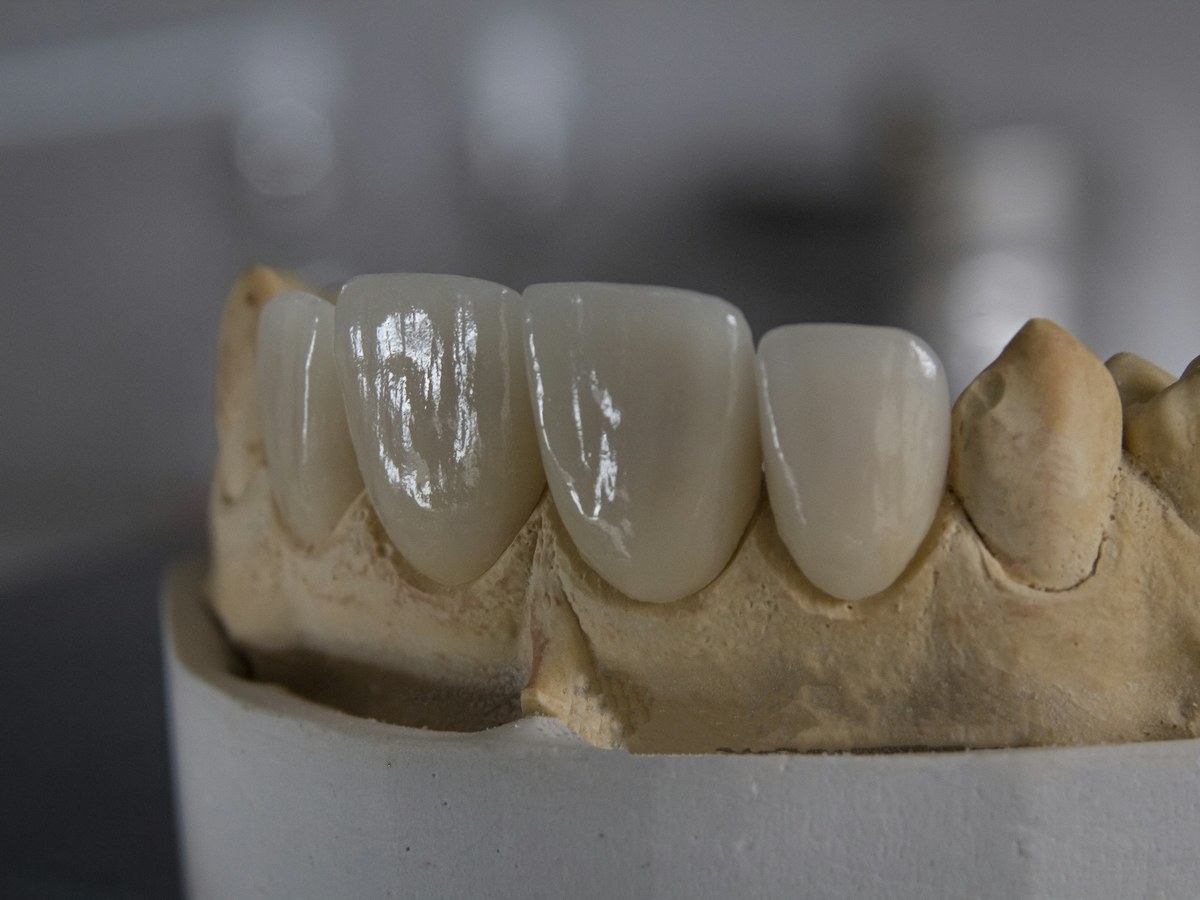
The short answer is yes, veneers can look completely natural, but only when several details come together at once. Material matters. Tooth preparation matters. Shade selection matters. The shape of the veneers matters even more than most people realize. And above all, the skill and restraint of the dentist matter.
That last point is the one patients usually underestimate. People often walk into a consultation worried about whether veneers will look too white. In practice, the bigger risks are more subtle. Teeth can look too flat, too bulky, too symmetrical, or too opaque. A smile can become technically straight and still look artificial. Natural teeth have tiny irregularities, soft translucency near the edges, slight variation in texture, and proportions that fit the face rather than a trend.
When people search for Veneers Oxnard CA, they are usually hoping for one thing above all: improvement without looking “done.” That is a reasonable goal. It is also a realistic one, if the case is planned carefully.
What “natural” really means in cosmetic dentistry
A natural-looking veneer does not mean a perfect white rectangle glued to every visible tooth. Real teeth do not look like that. Natural teeth reflect light in layers. They have enamel translucency. They pick up brightness differently at the center than at the edges. They also relate to the lips, the gums, the person’s complexion, and even the way they speak.
A veneer can be beautiful in a photograph and still look unnatural in conversation. That happens when the design ignores movement and context. Someone may have a smile that looks bright and uniform in a still image, but when they laugh, the veneers may seem bulky or flat because the contours are overbuilt. That is why experienced cosmetic dentists spend so much time evaluating facial expression, bite, and lip dynamics, not just tooth color.
In a very practical sense, natural-looking veneers should do three things. They should blend with the patient’s face, fit with neighboring teeth and gum tissue, and avoid drawing attention to themselves as dental work. If people notice that someone looks refreshed, polished, or more confident without immediately guessing veneers, that is usually the best outcome.
Why some veneers look fake
Most “fake veneer” results come from a handful of predictable problems. The issue is rarely that veneers themselves are unnatural. It is that the treatment plan prioritized speed, trend aesthetics, or excessive whiteness over individuality.
One common problem is over-whitening. Very bright shades can look striking under office lighting, but in daylight they may appear chalky. Another is excessive uniformity. Teeth that are all exactly the same length, width, and brightness can lose the small variations that make a smile believable. Overly opaque materials are another culprit. If light cannot pass through the porcelain in a way that resembles enamel, the smile can look dense and artificial.
Preparation errors also play a role. If veneers are too bulky, they can push outward and create that “stuck on” appearance people fear. Sometimes this happens because not enough enamel was reduced before placement. Other times it happens because the original tooth position was not managed properly, especially when crowding or rotation was present.
There is also a stylistic issue. Cosmetic dentistry has trends, just like fashion. A patient may come in with screenshots of ultra-bright, highly uniform celebrity smiles. Those can be attractive in certain contexts, but they do not suit every face. A smile that looks right on camera, under curated lighting, may not be the right choice for someone who wants subtle, everyday realism.
The role of porcelain and modern materials
Porcelain veneers have come a long way. High-quality ceramic materials can mimic enamel with impressive realism when used correctly. They can reflect and transmit light in ways that older, more opaque materials could not. This is one reason well-made veneers often look better than people expect.
Still, material alone does not guarantee a natural result. A beautiful ceramic in the wrong shape will still look wrong. Think of the material as the medium, not the masterpiece. The artistry comes from how the restoration is designed and layered.
In many cases, a ceramist will build in gentle translucency near the incisal edge, subtle texture across the surface, and tiny internal characterizations that prevent the tooth from Veneers Oxnard CA looking lifeless. These details are easy to miss when you glance at a smile, which is exactly the point. The best cosmetic dentistry often disappears into the face.
For patients considering Veneers Oxnard CA, this is worth asking about during consultation. A dentist who can explain how material choice affects translucency, value, and texture is usually thinking beyond simple whiteness.
The most natural smiles are customized, not copied
No two patients need the same veneer design. A naturally youthful smile for a 28-year-old may not be the right design for someone in their 50s who wants refinement without dramatic change. Tooth display, lip support, gum symmetry, and facial proportions all shift from person to person.
I have seen patients bring in photos of a friend’s smile and ask for exactly that. It almost never works as a direct copy. The same tooth shape can look soft and elegant on one face, and broad or dominant on another. The width of the arch, the curve of the lower lip, and the patient’s speech patterns all affect what will read as natural.
A good cosmetic plan starts with the patient’s current smile and asks smarter questions. Are the teeth worn down and aged? Is there spacing? Discoloration that whitening cannot fix? Small chips that draw the eye? Mild misalignment? Each of those issues calls for a slightly different design approach.
Sometimes the most natural result comes from treating only the most visible teeth. Other times, limiting treatment creates a mismatch in shade or shape and makes veneers more noticeable. Judgment matters here. The goal is not always minimal intervention in the narrowest sense. The goal is the least intervention needed to create a believable whole.
Shape matters more than patients expect
Shade gets most of the attention, but shape usually determines whether a veneer looks real. Overly square teeth can appear harsh. Teeth that are too rounded can look juvenile. Front teeth that are too long can dominate the smile. Teeth that are too short can make the face seem older or more collapsed around the mouth.
Natural smiles usually have rhythm. Central incisors tend to lead. Laterals often soften that transition. Canines provide structure and frame. If all those teeth are given the same visual weight, the smile can lose depth.
There is also the question of edge design. Younger teeth often show slight translucency and more defined edge anatomy. More mature smiles may look better with a slightly softer appearance. These are not rigid rules, but they illustrate why natural cosmetic dentistry is part science and part portrait work.
One patient might need a broader smile to fill the corners and reduce dark spaces. Another might need only subtle reshaping to soften chips and uneven wear. The treatment can involve the same material, porcelain veneers, yet the design language is completely different.
Color selection is more nuanced than “white”
Patients often ask for the whitest natural shade. That phrase sounds simple, but it hides a lot of nuance. White is not one thing. There is brightness, but also warmth, translucency, chroma, and surface reflection.
A Veneers Oxnard CA tooth can be bright and still look natural if it carries the right translucency and fits the complexion. It can also be less bright and still look artificial if it is too opaque. This is where an experienced dentist and ceramist earn their keep. They are not just choosing a color tab. They are balancing light behavior.
The surrounding teeth matter too. If only a few veneers are being placed, the shade must harmonize with adjacent teeth. In those cases, patients often whiten first so the final match can be made against a brighter baseline. If a full smile zone is being restored, there is more freedom, but even then, “movie star white” is not always the best long-term choice. A shade that feels exciting in the chair can become tiring in daily life.
Natural teeth also are not one flat tone from gumline to edge. Small shifts in color and translucency give life to a smile. When that variation is reproduced thoughtfully, veneers stop looking like restorations and start looking like teeth.
The planning phase is where natural results are won or lost
The consultation and design phase matter as much as the final bonding appointment. This is when photos are reviewed, smile lines are analyzed, bite concerns are identified, and expectations are tested against reality.
A quality planning process often includes mock-ups, temporary restorations, or digital previews. These tools are useful, but they should be handled carefully. A digital mock-up can show general direction, but it is not a guarantee of how light will interact with real ceramic. Temporaries can be even more valuable because the patient can speak, smile, and live with the shape for a short period. That often reveals issues no still image can catch.
This phase is also when a dentist determines whether veneers are even the best option. Sometimes orthodontics should come first. Sometimes whitening and bonding can solve the problem with less tooth reduction. Sometimes gum contouring is needed to create proper symmetry before veneer placement. Good cosmetic dentists do not force every case into the veneer category.
Here is a short checklist of questions worth asking during a consultation:
- How many veneer cases like mine have you treated?
- Will you use a mock-up or temporaries so I can preview shape and length?
- How do you choose a natural shade for my skin tone and smile?
- What happens if my bite or tooth position makes veneers look bulky?
- How much natural tooth structure will need to be altered?
Those questions tend to lead to meaningful answers. They also quickly reveal whether the conversation is centered on customization or sales.
Not everyone is a great veneer candidate
Veneers can transform a smile, but they are not ideal for every patient. Someone with heavy grinding, unstable bite issues, or poor oral hygiene may need other treatment first. If the foundation is not healthy, even beautiful veneers can fail early or look wrong over time.
There is also the issue of expectations. Patients who want a dramatic change but insist on treating too few teeth may be disappointed. Patients who want “perfectly straight” without addressing major crowding may end up with teeth that look too thick. Patients who want ultrawhite veneers while keeping very dark adjacent natural teeth may create obvious contrast.
This is one of the most important parts of a professional consultation. Good candidates are not just people who can afford veneers. They are people whose oral health, habits, anatomy, and goals align with what veneers actually do well.
In my experience, the happiest veneer patients are usually the ones who care about refinement more than spectacle. They want to smile freely, not advertise that they had cosmetic work done. That mindset often leads to better decisions.
The difference between “looks nice” and “looks real”
A smile can be attractive without looking real. That distinction matters. Many patients do not realize it until they see side-by-side examples.
The “nice but not real” smile often has these traits:
- very bright, uniform shade
- identical tooth shapes across the front
- flat surfaces with little texture
- bulky contours near the gumline
- no translucency at the edges
By contrast, a realistic smile has variation, softness, and detail. It is balanced but not sterile. It looks alive under different lighting conditions. It belongs to the face.
That does not mean every patient should choose the most conservative aesthetic. Some prefer a glamorous look and are happy with a whiter, more stylized smile. There is nothing wrong with that if it is intentional. The key is clarity. A patient should understand the difference between “beautiful,” “dramatic,” and “natural,” because those goals overlap but are not identical.
Temporary veneers often reveal the truth
One of the most useful steps in cosmetic treatment is wearing temporaries or a mock-up before the final veneers are made. Patients can hear themselves speak, watch how the teeth look in morning light, and notice whether the length feels elegant or excessive.
I remember a case where a patient insisted she wanted noticeably longer front teeth because she felt her smile looked worn down. On the mock-up, the added length photographed beautifully in the office. But after two days, she came back and said the teeth felt too present when she talked and smiled casually. We shortened them slightly, softened the line angles, and the final result looked far more natural, while still giving her the freshness she wanted. That kind of adjustment is hard to make well if the case is rushed.
This is why careful cosmetic work takes time. A natural result is usually edited, not imposed.
Life in Oxnard matters more than you might think
Local lifestyle and environment can shape cosmetic decisions more than people expect. In a place like Oxnard, where sunlight is strong and people spend time outdoors, veneers are often seen in bright natural light rather than dim indoor settings. That matters. Teeth that seem subtly bright in the operatory can look much brighter on a sunny patio or at the beach.
For patients exploring Veneers Oxnard CA, it is smart to evaluate sample cases in multiple lighting conditions and ask how the shade will appear outdoors. Natural aesthetics are not judged only under dental office lights. They are judged in real life, while talking, laughing, and standing a few feet away from someone in daylight.
This local context also reinforces the value of surface texture and translucency. Strong light exposes opacity quickly. Veneers that are too dense can look flat outside. Veneers with proper layering and contour usually hold up better in natural sun.
Maintenance affects how natural veneers stay over time
Even perfectly designed veneers can lose their natural appeal if the surrounding mouth is not maintained. Gum inflammation can make margins more visible. Plaque accumulation can dull the surface. Chipping or wear can change symmetry.
Veneers do not decay, but the teeth underneath and around them still need care. So do the gums. A healthy, stable gumline frames veneers and helps them disappear naturally into the smile. When the gum tissue is irritated or receding, even excellent work can start to look obvious.
Patients should also understand that veneers are durable, not indestructible. Night guards are often wise for people who clench or grind. Routine hygiene visits remain important. Habits such as biting ice, opening packages with teeth, or chewing on pens are a poor idea.
The better the maintenance, the longer the veneers keep their natural polish, luster, and integration with the rest of the smile.
How to judge whether a dentist can deliver a natural result
The best indicator is not a flashy website headline. It is the quality and style of actual results. Look for smiles that fit the individual rather than a repeated cookie-cutter look. If every before-and-after photo shows the same extra-white, same-shaped teeth regardless of age, face, or starting point, that tells you something.
Pay attention to close-ups, but also to full-face photos. Natural veneers should make sense from conversational distance. Ask whether the dentist works closely with a skilled ceramist. Ask to see cases that resemble your own, whether that means stained teeth, worn edges, spaces, or mild crowding.
Listen to the consultation. If the provider spends most of the appointment talking about financing, speed, or a universally ideal shade, that is not promising. If they ask detailed questions about how you want to look, how subtle you want the change, what bothers you when you smile, and whether you want people to notice the dentistry at all, that is a better sign.
Patients shopping for Veneers Oxnard CA often focus understandably on convenience and cost. Those factors matter. But cosmetic dentistry is one of the areas where experience, aesthetic judgment, and collaboration with the lab can make a visible difference every single day.
So, can veneers look completely natural?
Yes, they can. In the best cases, they do not just look natural in a photo. They look natural in conversation, outdoors, in motion, and over time. They fit the face. They suit the patient’s age and personality. They improve the smile without erasing character.
That level of result does not come from picking the whitest shade and covering every front tooth as quickly as possible. It comes from planning, restraint, precise preparation, thoughtful design, and materials used with skill. It also comes from choosing a dentist who sees cosmetic dentistry as individualized craft, not standardized product.
For someone considering veneers, that is the encouraging part. A natural smile is not a lucky accident. It is a deliberate outcome when the right hands are guiding the process.
Oxnard Dentistry
1730 E Gonzales Rd, Oxnard, CA 93036, United States
+1 805-307-8731
FAQ About Veneers Oxnard CA
How long do porcelain veneers last?
Porcelain veneers can last for many years, but they can chip, loosen, or wear over time. Their lifespan depends on factors such as your bite, whether you grind your teeth, and daily care. Regular dental visits let your dentist check their condition.
Are dental veneers permanent?
Traditional veneers often require removing a small amount of enamel, so that change to the tooth is generally irreversible. Veneers can still need repair or replacement. Ask your dentist how much preparation your teeth would require.
How much do veneers cost in Oxnard?
Cost depends on the material, how many teeth you want treated, and whether you need other dental work first. Ask for a written estimate that explains the price per tooth and what is included.